contributed by Dorothea Lantz, Director of Community Engagement at PWSA | USA
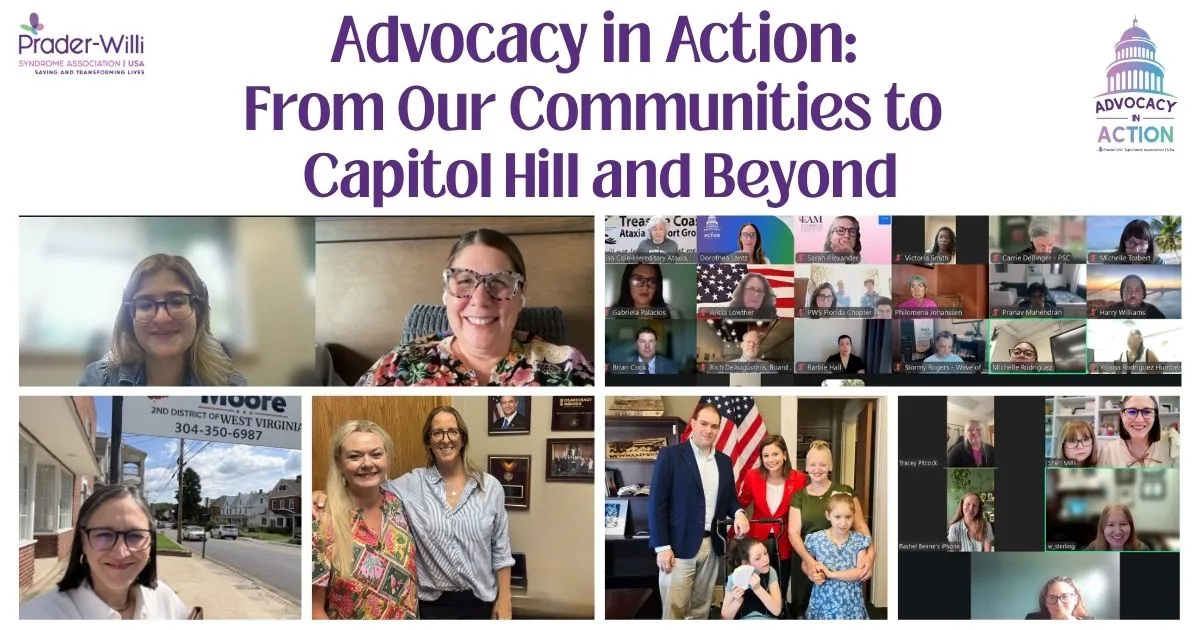
August has been another busy month for PWSA | USA advocacy. From advocates meeting with Members of Congress in their home districts to our team spending two days with Neurocrine Biosciences, we continue to make sure the PWS voice is represented wherever decisions are being made that impact our community.
PWS Advocates Take Part in Rare Across America
This month, PWSA | USA advocates once again put their voices into action by participating in the EveryLife Foundation for Rare Diseases’ Rare Disease Legislative Advocates (RDLA) Rare Across America program. Rare Across America gives advocates the opportunity to meet with Members of Congress and congressional staff while lawmakers are back home in their states and districts. It is an important complement to our annual PWSA | USA D.C. Fly-In and another opportunity for our advocates to strengthen relationships with their elected officials while joining the broader rare disease community around shared policy priorities.
This year, advocates are discussing several pieces of bipartisan legislation:
- Scientific EXPERT Act (H.R. 1532/S. 822): This legislation would formalize a process at the FDA that brings rare disease scientific experts, regulators, drug developers, scientific organizations, and patient advocates together to address some of the unique challenges involved in developing treatments for small and complex patient populations. These conversations could help tackle issues such as clinical trial design, meaningful endpoints, regulatory flexibility, and greater rare disease expertise throughout the review process.
- Genomic Answers for Children’s Health Act (H.R. 7118): This legislation would clarify Medicaid coverage of whole genome and whole exome sequencing for children who meet certain clinical criteria. For families affected by rare genetic diseases, access to genomic testing can help shorten the diagnostic odyssey and get children to the right diagnosis, care, and treatment sooner.
- Access to Genetic Counselor Services Act (H.R. 6280/S. 3607): As genetic testing becomes an increasingly important part of diagnosing and treating rare diseases, families need access to professionals who can help them understand and navigate that information. This legislation would recognize genetic counselors as Medicare providers and allow them to directly bill Medicare for their services.
- Credit for Caring Act (H.R. 2036/S. 925): This legislation recognizes something our PWS families know all too well—the enormous responsibility carried by family caregivers. The bill would provide eligible working family caregivers with a federal tax credit for a portion of qualified caregiving expenses. For families living with PWS, where lifelong supervision and caregiving are often necessary, policies that recognize and support caregivers are especially meaningful.
Advocates are also encouraging Members of Congress to join the bipartisan, bicameral Rare Disease Congressional Caucus, helping ensure that rare disease issues continue to have a dedicated voice on Capitol Hill.
While not every Rare Across America priority is specific to PWS, each represents an important piece of the larger rare disease ecosystem—from getting children diagnosed sooner and strengthening treatment development to expanding access to genetic expertise and supporting the families who provide care every day.
Just as importantly, Rare Across America is about building relationships. Our advocates aren’t simply showing up for one meeting. They are continuing conversations with congressional offices, bringing the PWS story into broader rare disease policy discussions, and establishing themselves as trusted resources for lawmakers in their own communities.
Bringing the PWS Voice Directly to Neurocrine
Our advocacy work this month also took us to Neurocrine Biosciences, where several members of the PWSA | USA team spent two days connecting with and educating the Neurocrine team about Prader-Willi syndrome and the priorities of our community.
The visit included a PWS Lunch & Learn, a tour of the Neurocrine campus, and conversations with team members across the organization. Most importantly, it gave us an opportunity to talk candidly about what life with PWS actually looks like and what individuals and families need from the companies working in this space. The visit comes at an important time for our community. Following Neurocrine’s acquisition of Soleno Therapeutics, VYKAT™ XR—the first FDA-approved treatment for hyperphagia in PWS—is now part of Neurocrine’s portfolio.
As exciting as the progress in PWS treatment has been, our message remains clear: there is still much more work to do.
Our conversations focused not only on treatment, but also on the broader needs and priorities of the PWS community. We discussed the importance of listening directly to individuals with PWS and their caregivers, understanding the real-world impact of hyperphagia and the many other challenges associated with PWS, ensuring families can access approved treatments, and continuing to invest in research and innovation.
Industry engagement is an important part of advocacy. As companies make decisions about research, clinical trials, treatments, education, and access, the people who live with PWS every day need to be part of those conversations.
We are grateful to the Neurocrine team for opening their doors, taking the time to learn from our community, and beginning what we hope will be a strong and meaningful partnership moving forward.
Advocacy Doesn’t Stop
Whether we’re sitting across the table from a Member of Congress, talking with FDA and policymakers, or spending time with the companies developing and delivering treatments, our goal remains the same: make sure the PWS voice is in every room where decisions affecting our community are being made.
Our D.C. Fly-In may happen once a year, but advocacy doesn’t stop when we leave Washington. in May. District meetings in August. Industry engagement throughout the year. The PWS voice is at the table—always.
Thank you to every individual with PWS, parent, sibling, caregiver, and advocate who continues to show up, share their story, and move this work forward. Together, we’re making sure our community isn’t just part of the conversation—we’re helping shape it.
Share this!

 Perry A. Zirkel has written more than 1,500 publications on various aspects of school law, with an emphasis on legal issues in special education. He writes a regular column for NAESP’s Principal magazine and NASP’s Communiqué newsletter, and he did so previously for Phi Delta Kappan and Teaching Exceptional Children.
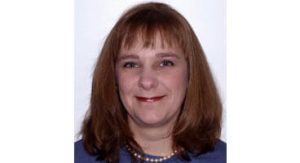 Jennifer Bolander has been serving as a Special Education Specialist for PWSA (USA) since October of 2015. She is a graduate of John Carroll University and lives in Ohio with her husband Brad and daughters Kate (17), and Sophia (13) who was born with PWS.
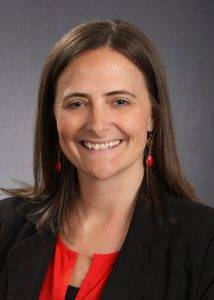 Dr. Amy McTighe is the PWS Program Manager and Inpatient Teacher at the Center for Prader-Willi Syndrome at the Children’s Institute of Pittsburgh. She graduated from Duquesne University receiving her Bachelor’s and Master’s degree in Education with a focus on elementary education, special education, and language arts.
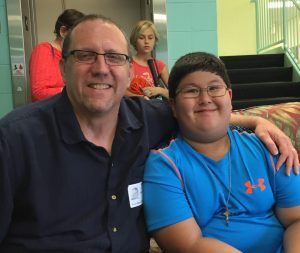 Evan has worked with the Prader-Willi Syndrome Association (USA) since 2007 primarily as a Crisis Intervention and Family Support Counselor. Evans works with parents and schools to foster strong collaborative relationships and appropriate educational environments for students with PWS.
 Staci Zimmerman works for Prader-Willi Syndrome Association of Colorado as an Individualized Education Program (IEP) consultant. Staci collaborates with the PWS multi-disciplinary clinic at the Children’s Hospital in Denver supporting families and school districts around the United States with their child’s Individual Educational Plan.
 Founded in 2001, SDLC is a non-profit legal services organization dedicated to protecting and advancing the legal rights of people with disabilities throughout the South. It partners with the Southern Poverty Law Center, Protection and Advocacy (P&A) programs, Legal Services Corporations (LSC) and disability organizations on major, systemic disability rights issues involving the Individuals with Disabilities Education Act (IDEA), Americans with Disabilities Act (ADA), and the federal Medicaid Act. Recently in November 2014, Jim retired.