

Identify Barriers
Uncover and address systemic challenges that create inequities within diagnosis, care, research, and community access.

Improve Access
Expand timely diagnosis, quality healthcare, educational support, and resources for all families affected by PWS.

Increase Representation
Elevate historically marginalized voices in leadership, research participation, advocacy, and decision-making spaces.

Build Equitable Systems
Embed equity into organizational policies, programs, partnerships, and long-term community initiatives.

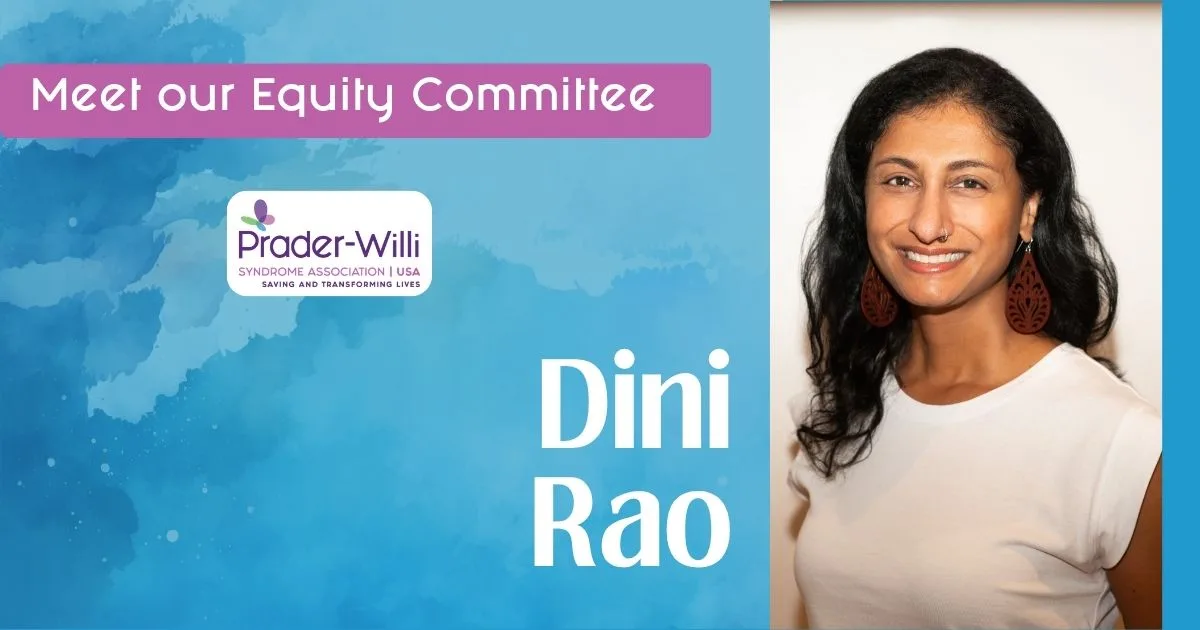
Dini Rao | Committee Chair
Dini Rao is an Undoing Racism community organizer, board member, special needs advocate and wine entrepreneur. She has served on multiple boards, advising on business strategies and equity plans. As a parent to two kids, Ayoni with Prader Willi Syndrome, Dini spends much of her time caregiving and advocating. Seeing a gap in health outcomes for people living with PWS, she created a taskforce to work with stakeholders on creating better equity and co-founded an affinity group for people of color called Colors of Hope. She aims to use her hosting and organizing skills along with her Harvard MBA to create more justice and joy in the world.

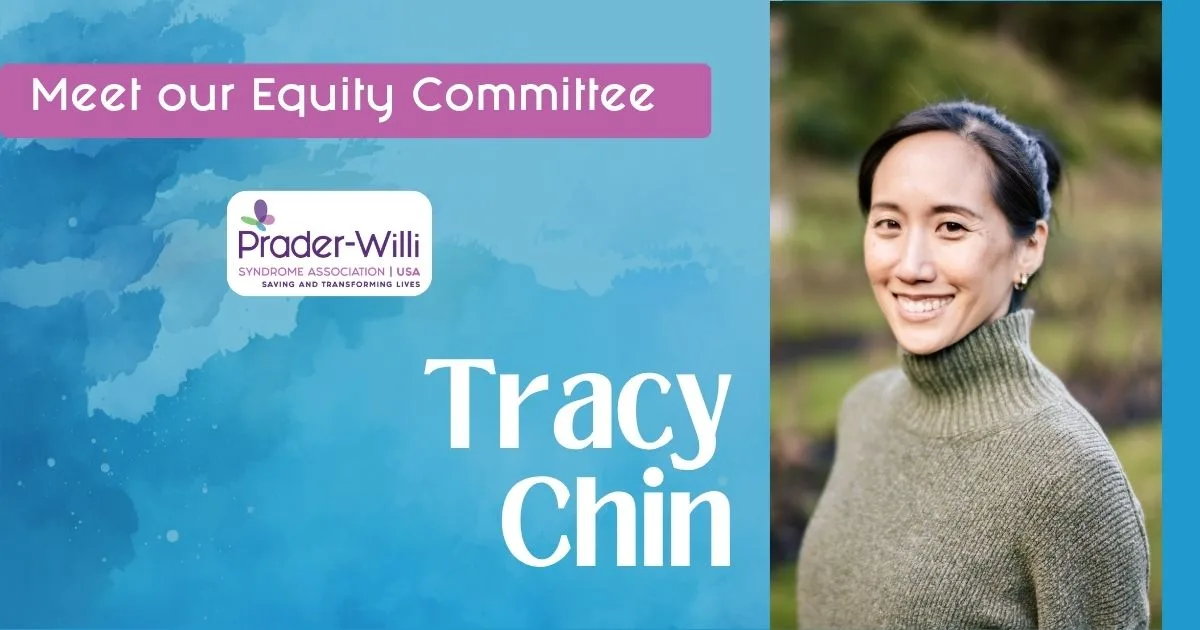
Tracy Chin
Tracy Chin is a registered nurse working in transitional care at Oregon Health and Science University (OHSU). Prior to her becoming an RN, she worked and interned at various nonprofits addressing cancer research, houselessness, and LGBTQIA+ rights. During this time, she decided to go back to school to become an RN. Upon graduating, she worked in critical care, but ultimately decided to return to the nonprofit world and began working as an RN at a homeless shelter.
This catapulted her into various roles working at a Medicaid organization, primary care clinic, emergency homeless shelter, County COVID RN navigator, and now as a transitional care RN at OHSU. In doing so, Tracy helps medically, and psychosocially complex patients transition back into the community. Throughout all of these positions, Tracy passionately advocates for the deeply marginalized and most vulnerable populations. She employs trauma informed care along with harm reduction approaches in her work and feels strongly about equity in all its forms.
In addition to her work as a transitional care RN, Tracy facilitates shadowing opportunities for OHSU medical students to learn about this important work being done in the community. She regularly presents on Social Drivers of Health and Health Equity to OHSU nursing students. She is also going on her second year of presenting and proctoring an intersession on Disabilities for OHSU medical students.
Tracy graduated with a BA in sociology from UCLA and went on to obtain her MS in nursing from UCLA. She has a young daughter with Prader-Willi Syndrome, a husband, dog, and two cats. She currently resides in Portland, OR and loves anything that has to do with animals, joy, live music, tea, and good food.

Ashish Rishi | Advisor role, non-voting
Ashish Rishi is the Founder of Unwritten Health, a health-equity data and insights company focused on translating lived experience into decision-ready strategy for healthcare, life sciences, and nonprofit organisations. His work centres on identifying structural gaps in diagnosis, access, and research participation, and supporting leadership teams to embed equity within governance and implementation frameworks.
Ashish previously founded and led COUCH Health, a global patient engagement agency working with pharmaceutical and research partners to improve inclusion in clinical trials and healthcare programmes.
He serves as a peer reviewer for the Journal of Patient Experience and sits on the Board of IHI-READI, Europe’s largest consortium advancing diversity and inclusion in clinical research across industry, academia, and patient organisations.
Ashish brings a systems lens to equity governance, helping boards move from intention to structured, accountable action.

Dhivya Venkataraman
Dhivya Venkataraman has more than 20 years of experience supporting education nonprofits and public-sector organizations, with a career focused on helping organizations strengthen their impact and better serve communities. Her approach to capacity building is grounded in equity, centering the experiences of marginalized communities and ensuring diverse perspectives inform decisions and strategy. She believes this kind of intentional work is essential to creating lasting, meaningful change.
Dhivya has worked with community-based organizations, school systems, nonprofits, and philanthropies across the education sector. She is currently an independent advisor, supporting social impact organizations with strategic planning and capacity-building work. She is presently supporting a state education agency in developing strategies to improve outcomes and experiences for learners with disabilities and their families. Prior to her current role, she worked at Charles and Lynn Schusterman Family Philanthropies, where she managed grants in the education portfolio and led efforts to support grantees in building stronger systems and practices. Earlier in her career, she was an Associate Partner at Bellwether Education Partners, advising education organizations on strategy, talent, and change management. Dhivya holds master’s degrees in Public Policy and Business Administration from Georgetown University and a bachelor’s degree in Business Administration from The George Washington University. She also serves as Vice President of the Board of City Kids Wilderness Project.

Dr. Leon Caldwell
Dr. Leon D. Caldwell is a nationally recognized public health and health equity leader with more than 25 years of experience in intervention science, behavioral health, community mental health, public health strategy, and systems transformation. His work has focused on advancing equitable approaches to health, wellness, prevention, and community-centered solutions for historically underserved populations. Dr. Caldwell has led national initiatives in health equity, equity focused learning, measurement, evaluation and strategy, and community engagement across healthcare, philanthropy, and nonprofit sectors.
Dr. Caldwell also brings lived experience to his advocacy and leadership within the Prader- Willi syndrome community. He is the father of a 22-year-old son, Kahlil, who has Prader-Willi syndrome. He previously served on the Board of Directors of the Prader-Willi Syndrome Association USA (PWSA USA) and is believed to have been among the organization’s first board members of color. His involvement reflects a long-standing commitment to advancing inclusion, equity, family support, and broader representation within the PWS community, especially fathers’ perspective.
Through both his professional expertise and personal experience as a parent, Dr. Caldwell brings a unique perspective to conversations about equity, access, systems of care, and improving quality of life for individuals and families impacted by Prader-Willi syndrome. Leon lives in Laurel, Howard County MD.

Stacy Ward | PWSA USA CEO, BCBA, MS
Stacy Ward, a longtime leader in the PWS community, has a background rich in non-profit, behavioral health, education advocacy and held multiple successful leadership roles. With 30 years of experience working with individuals with ID/DD and 20 years working with individuals diagnosed with PWS, Stacy brings a variety of skills to the role of CEO of PWSA | USA. Prior to her appointment as CEO with PWSA | USA, Stacy was the Director Family Support.
As Director of Family Support, she expanded upon existing and developed new educational and support programs for individuals with PWS, their families and caregivers increasing Family Support actions by 106%. Prior to that, Stacy spent over 12 years working for Catholic Charities Disabilities Services in Albany, NY where she focused on overseeing both the residential and clinical departments. Stacy earned a bachelor’s degree in psychology and human services from Russell Sage College and her master’s degree in applied behavior analysis from Kaplan University. She possesses a special education advocacy certification from the William and Mary College of Law Pele Clinic and is a member of the Council of Parent Attorneys and Advocates (COPAA) and currently resides in Troy, NY.
In an effort to move forward into a more equitable community, where all families with PWS are effectively represented and have access
In an effort to move forward into a more equitable community, where all families with PWS are effectively represented and have access

In an effort to move forward into a more equitable community, where all families with PWS are effectively represented and have access

 Perry A. Zirkel has written more than 1,500 publications on various aspects of school law, with an emphasis on legal issues in special education. He writes a regular column for NAESP’s Principal magazine and NASP’s Communiqué newsletter, and he did so previously for Phi Delta Kappan and Teaching Exceptional Children.
 Jennifer Bolander has been serving as a Special Education Specialist for PWSA (USA) since October of 2015. She is a graduate of John Carroll University and lives in Ohio with her husband Brad and daughters Kate (17), and Sophia (13) who was born with PWS.
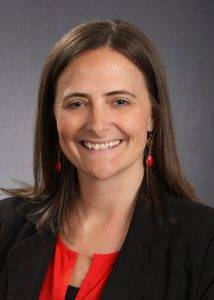 Dr. Amy McTighe is the PWS Program Manager and Inpatient Teacher at the Center for Prader-Willi Syndrome at the Children’s Institute of Pittsburgh. She graduated from Duquesne University receiving her Bachelor’s and Master’s degree in Education with a focus on elementary education, special education, and language arts.
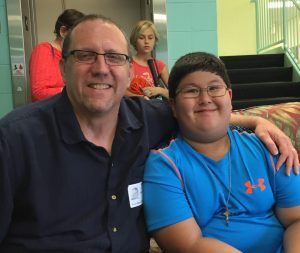 Evan has worked with the Prader-Willi Syndrome Association (USA) since 2007 primarily as a Crisis Intervention and Family Support Counselor. Evans works with parents and schools to foster strong collaborative relationships and appropriate educational environments for students with PWS.
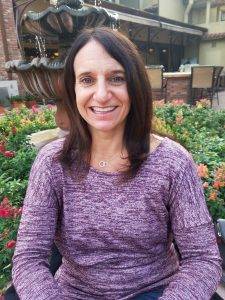 Staci Zimmerman works for Prader-Willi Syndrome Association of Colorado as an Individualized Education Program (IEP) consultant. Staci collaborates with the PWS multi-disciplinary clinic at the Children’s Hospital in Denver supporting families and school districts around the United States with their child’s Individual Educational Plan.
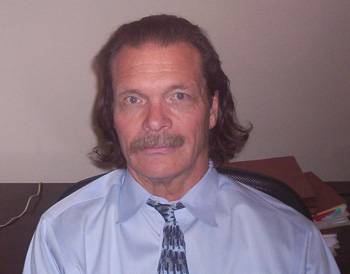 Founded in 2001, SDLC is a non-profit legal services organization dedicated to protecting and advancing the legal rights of people with disabilities throughout the South. It partners with the Southern Poverty Law Center, Protection and Advocacy (P&A) programs, Legal Services Corporations (LSC) and disability organizations on major, systemic disability rights issues involving the Individuals with Disabilities Education Act (IDEA), Americans with Disabilities Act (ADA), and the federal Medicaid Act. Recently in November 2014, Jim retired.