
As PWS parents and caregivers know, food and diet are a lifelong struggle with individuals with PWS. It begins with hypotonia and failure to thrive in newborns and infants, progressing through the various stages of hyperphagia throughout childhood and adulthood. Some caregivers would say that the challenges become more manageable as our loved ones age, simply by the fact that we are more informed, more experienced, and have more support. But in the beginning, when we are thrust haphazardly into the world of Prader-Willi syndrome and our babies are often listless and unable to eat, the challenge may seem insurmountable. Thankfully, with modern day tools and techniques, we are able to navigate this initial challenge successfully. It is important, however, to understand the options.
Nasogastric Tube (NG tube)
- *A small tube that is inserted into the nose down into the stomach.
- *Typically easy to maintain/manage at home.
- *May promote a timelier transition from tube feeding to oral feeding.
Research, including a large recent study of individuals with Prader-Willi syndrome, shows that many infants with PWS who have early feeding difficulties can be safely supported with NG tubes for several months and often transition to full oral feeding by around 6 months of age. This study found that serious complications were much less common with NG tubes than with G-tubes. Other research in NICU graduates has also shown that babies sent home with NG tubes are more likely to achieve full oral feeding sooner and tend to have fewer hospital visits related to feeding complications. Some hospitals, however, do not allow home NG feeding because of concerns about tube movement, aspiration, or possible heart rate changes from vagal stimulation, and because not all systems are set up to support families at home with NG care. In these situations, a G tube may be the better option.
Gastric Tube (G tube):
- *A tube that is surgically placed through the abdomen into the stomach.
- *Typically recommended IF supplemental feeding will be needed more than 2 to 3 months.
G tubes can provide stable, long-term access and may be appropriate when there is significant aspiration risk, ongoing breathing issues, or a clear need for prolonged tube feeding. However, they require surgery and are linked to higher rates of infection, leakage, and other complications, and they often remain in place longer than families expect.
Which one do we choose?
In many cases, an NG tube is the preferred and recommended strategy. However, some infants may have complications or issues that inhibit the use of an NG tube. Also, some NICUs may still require the use of a G tube before sending the baby home. While we encourage families to advocate for the NG tube in situations where it is possible, we also recognize that the most important details are that your baby is fed and growing.
It is also important to note that not all babies with PWS will be required to use a feeding tube. While there will likely still be challenges with feeding in those first few weeks and months, some families have, under the supervision of medical professionals, been able to avoid the use of either. Again, the best option is the one that supports your baby’s health and growth.
Please reach out to PWSA | USA if you have any questions or concerns about feeding tube use with your child at infor@pwsausa.org
Parent Perspectives
“Feeding tubes were never even suggested to us, but we certainly struggled to get Freya to gain weight. I think if we had been at a bigger hospital, or in a bigger town, they would have taken her to the NICU and given her a feeding tube. As it was, we were home with her, struggling to keep her awake to nurse. Two weeks in I had to start using a bottle and even then, it was very time consuming. By the time I would get her to drink 2 oz. (45 minutes – 1 hour), it would be time to pump again. We were told to add olive oil to her bottle for extra fat and eventually, formula. It was one of the most stressful and scary times in my life, but eventually she began to gain weight and grow. Sometimes I wonder how different it would have been had she been given a feeding tube.” – Anne Fricke, mom to Freya, 14 with PWS
“Justice had an NG tube for about three months because she was simply too weak to leave the hospital without some support. It wasn’t ideal, but I know without it things would have been so much harder for her. I set alarms through the night to wake her for feeds, first trying with a bottle, then giving the rest through the NG tube, followed by pumping, cleaning everything, and starting the cycle all over again. Sleep was basically nonexistent, but it was worth every exhausted moment. I would do it all over again in a heartbeat to give Justice the best possible start and set her up for success.” – Kristi Rickenbach, mom to Justice Faith, 22 living with PWS
“Olive had a G tube for about 7 months of her life. We did not get our PWS diagnosis until around 6 months and we were not given the option to go home with an NG tube. We were told simply if she got the G tube put in, we could leave the NICU and continue on with therapies outpatient….so that’s what we did. And we are so grateful. The G tube was extremely easy to use. We never had to worry about olive pulling it out or anything. We set alarms every 3 hours and we’d try what we could get her to take with the bottle and feed the rest through her G tube. Once we received her diagnosis we started her on HGH and she gained the strength pretty quickly to take her bottles in full. We removed her G tube at home and the hole closed up within the hour beautifully.” – Lucy Sinsheimer, mom to Olive, 1 living with PWS
“As she was born, the delivery doctor broke through the silence and said to the nurses, “Is everything okay over there?” That day, we went in to have a C-Section with great anticipation and somehow, left following an ambulance to the NICU.
After joining the OT for the swallow test, I’ll never forget watching our daughter drink her bottle and her oxygen tanking with each sip. Fluid went up her nose and down her airway, she never made a sound, and then, shockingly, the OT yelled out, “SHE FAILED!”
Something isn’t right. What’s wrong with our baby?
The next conversation was with the neonatologist and GI surgeon about if she was going to stay on her NG feeding tube (in her nose) or a G-tube (surgical intervention to feed straight to the stomach). It was all so confusing, we didn’t know what to do, NG or G-tube?
My husband and I just stopped and prayed for answers and then, there was the neonatologist, standing right in front of us! She was kind and just gave it to us straight,
“Had she coughed, we wouldn’t be having this conversation. She needs to eat, SAFELY.”
Having a newborn surgery seemed like such a HUGE risk but we agreed on the G-tube.
I kept thinking:
“What if she didn’t survive?”
“How long would she need it for?”
Then I thought, “Don’t these nurses go to SCHOOL for this!? Don’t they get PAID to do this!?
And for us, after just 7 days of watching videos and practicing on a doll, we’ll just roll home and feed our little one with this machine!”
It was like standing on a plane, getting ready to skydive!
But then, the brave kicks in. You realize you will do anything to help your child survive so we learned, we practiced, and we did it! Our daughter was fed for 11 months on a G-tube, we went from not wanting it to being enormously grateful for it, and what I learned next was the most important part of the journey, that love can truly move mountains.
She is now 7 years old, living an abundant life, and she always has enough hugs and love, literally, for everyone!” – Christina Argo, mom to Oaklyn, 7, living with PWS
Resources:
Ask Nurse Lynn: G-Tubes for Infants – Prader-Willi Syndrome Association | USA
Share this!


 Perry A. Zirkel has written more than 1,500 publications on various aspects of school law, with an emphasis on legal issues in special education. He writes a regular column for NAESP’s Principal magazine and NASP’s Communiqué newsletter, and he did so previously for Phi Delta Kappan and Teaching Exceptional Children.
 Jennifer Bolander has been serving as a Special Education Specialist for PWSA (USA) since October of 2015. She is a graduate of John Carroll University and lives in Ohio with her husband Brad and daughters Kate (17), and Sophia (13) who was born with PWS.
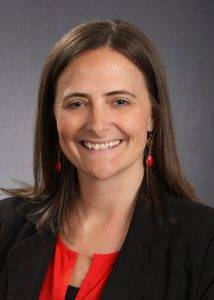 Dr. Amy McTighe is the PWS Program Manager and Inpatient Teacher at the Center for Prader-Willi Syndrome at the Children’s Institute of Pittsburgh. She graduated from Duquesne University receiving her Bachelor’s and Master’s degree in Education with a focus on elementary education, special education, and language arts.
 Evan has worked with the Prader-Willi Syndrome Association (USA) since 2007 primarily as a Crisis Intervention and Family Support Counselor. Evans works with parents and schools to foster strong collaborative relationships and appropriate educational environments for students with PWS.
 Staci Zimmerman works for Prader-Willi Syndrome Association of Colorado as an Individualized Education Program (IEP) consultant. Staci collaborates with the PWS multi-disciplinary clinic at the Children’s Hospital in Denver supporting families and school districts around the United States with their child’s Individual Educational Plan.
 Founded in 2001, SDLC is a non-profit legal services organization dedicated to protecting and advancing the legal rights of people with disabilities throughout the South. It partners with the Southern Poverty Law Center, Protection and Advocacy (P&A) programs, Legal Services Corporations (LSC) and disability organizations on major, systemic disability rights issues involving the Individuals with Disabilities Education Act (IDEA), Americans with Disabilities Act (ADA), and the federal Medicaid Act. Recently in November 2014, Jim retired.