

contributed by Jennifer Miller, M.D., Professor of Pediatrics, Division of Endocrinology, University of Florida
Recent reports of serious complications and deaths among people with Prader-Willi syndrome who received VYKAT XR deserve attention. Families and clinicians should absolutely prioritize patient safety. But there is an important question that should not get lost in the headlines: Did the medication cause these outcomes, or did failures in prescribing, patient selection, dosing, monitoring, or management of known risk factors contribute to them?
That distinction is not semantic. It is the difference between identifying a correctable problem in clinical practice and incorrectly concluding that an approved treatment itself is responsible for every serious event reported after its use.
VYKAT XR’s prescribing information is unusually explicit about several of the risks that have generated concern. Before treatment, clinicians are instructed to assess fasting glucose and HbA1c levels, optimize pre-existing hyperglycemia, and determine risk factors for development of edema (e.g., extreme obesity, untreated obstructive sleep apnea, underlying cardiac issues). The medication is prescribed with a defined titration schedule. Patients are to be monitored for hyperglycemia and for signs of edema or fluid overload, with additional monitoring, as well as modified lower and slower dosing, for patients with known risk factors.
Those requirements exist for a reason. Like all medications, VYKAT XR cannot simply be prescribed and forgotten; it requires appropriate patient selection, adherence to the prescribed dosing schedule, recognition of early warning signs, and ongoing clinical oversight. All of this makes it essential that every serious adverse event be investigated at the individual-patient level.
Before we blame the drug, many questions need to be answered. Was the patient’s baseline glucose appropriately assessed? Was pre-existing hyperglycemia addressed? Was pre-existing edema or pulmonary hypertension identified and addressed? Was the correct dose prescribed and titrated? Were glucose and HbA1c monitored as recommended? Did the patient develop edema or fluid overload, and if so, was it recognized and treated promptly? Were there underlying cardiac, renal, hepatic, respiratory, or other conditions that altered the patient’s risk? Were drug-drug interactions considered? All of these questions are the basic questions of pharmacovigilance.
Following its approval in 2000 for treatment of PWS, growth hormone faced very similar circumstances and challenges, with many serious adverse events and several deaths reported that were considered possibly due to the medication. Physicians and families had to weigh and these factors and ask questions such as those above to determine appropriate candidates for treatment. And now growth hormone therapy is standard of care for individuals with PWS, as putting appropriate patients on the medication, monitoring risk factors, and addressing side effects allowed the world to see that the benefits of the drug far exceeded the risks.
What I want to highlight is the fact that VYKAT XR has had positive life-changing benefits for hundreds of patients with PWS and their families. As someone who has seen more than 600 patients with PWS over the past >25 years, I can attest to the positive changes that this medication has made for individuals of all ages with this syndrome. These changes have been noted by several different observers in my clinic. One comment that struck me was that “PWS now seems to be a whole different disease than it was a year ago. There now is the possibility of a real positive and potentially independent future for these individuals on VYKAT XR” (quote from a fellow in Pediatric Endocrinology).
I feel the same way. Those individuals with PWS who are appropriate candidates for VYKAT XR and who respond to the medication (while acknowledging that not every medication is going to work for every person) have experienced remarkable quality of life and physiological effects, including decreases in hyperphagia, improved sleep, improved metabolic health markers (leptin, insulin, and adiponectin), lessened maladaptive behaviors, lessened anxiety, lessened skin picking, increased bone density and lean muscle mass, improved academic performance and academic achievement, and improved social and family relationships. These are not just individual or one-time reports from patients; these are reports that I have heard over and over and over again.
“I believe that this medication does not just have positive short-term effects for her; it is potentially altering the long-term path for her future and affording her opportunities that were once seen as out of reach for individuals with PWS.” [mother of a child on VYKAT XR for 1 year]
“This drug has given us our son back. Before VYKAT XR, he had lost agency over so many areas of his life. VYKAT XR has improved quality of life for our son, and by extension, our entire family.” [parent of a child on VYKAT XR for 7.5 years]
Throughout the clinical trials for VYKAT XR, I listened time and time again to families tell FDA that they were willing to accept risk—any risk at all—for the possibility of alleviating their loved one’s hyperphagia. While clinicians and families need to take seriously the benefit/risk ratio for VYKAT XR, hundreds of families would testify that the benefits of this medication are truly significant.
As, I was taught by my friend and mentor “Character is what you do when nobody is watching. Integrity is being willing to sign your name to it when people are watching.” I am putting my name on the line to let the world know that I truly believe in this drug and its wide-ranging, life-changing benefits for those with PWS.
Jennifer Miller, M.D.
Professor of Pediatrics
Division of Endocrinology
University of Florida
Dr. Miller received research funding from Soleno Therapeutics as a Principal Investigator in Phase 3 clinical trial for VYKAT XR, but has not received any honoraria or payment from Soleno Therapeutics.
Share this!


 Perry A. Zirkel has written more than 1,500 publications on various aspects of school law, with an emphasis on legal issues in special education. He writes a regular column for NAESP’s Principal magazine and NASP’s Communiqué newsletter, and he did so previously for Phi Delta Kappan and Teaching Exceptional Children.
 Jennifer Bolander has been serving as a Special Education Specialist for PWSA (USA) since October of 2015. She is a graduate of John Carroll University and lives in Ohio with her husband Brad and daughters Kate (17), and Sophia (13) who was born with PWS.
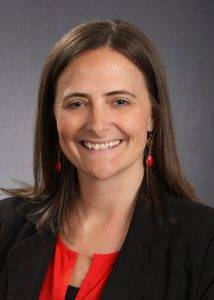 Dr. Amy McTighe is the PWS Program Manager and Inpatient Teacher at the Center for Prader-Willi Syndrome at the Children’s Institute of Pittsburgh. She graduated from Duquesne University receiving her Bachelor’s and Master’s degree in Education with a focus on elementary education, special education, and language arts.
 Evan has worked with the Prader-Willi Syndrome Association (USA) since 2007 primarily as a Crisis Intervention and Family Support Counselor. Evans works with parents and schools to foster strong collaborative relationships and appropriate educational environments for students with PWS.
 Staci Zimmerman works for Prader-Willi Syndrome Association of Colorado as an Individualized Education Program (IEP) consultant. Staci collaborates with the PWS multi-disciplinary clinic at the Children’s Hospital in Denver supporting families and school districts around the United States with their child’s Individual Educational Plan.
 Founded in 2001, SDLC is a non-profit legal services organization dedicated to protecting and advancing the legal rights of people with disabilities throughout the South. It partners with the Southern Poverty Law Center, Protection and Advocacy (P&A) programs, Legal Services Corporations (LSC) and disability organizations on major, systemic disability rights issues involving the Individuals with Disabilities Education Act (IDEA), Americans with Disabilities Act (ADA), and the federal Medicaid Act. Recently in November 2014, Jim retired.