

Board of Directors Member: Tina Ihlenfeld, MBA
Board Role: Treasurer
Years on the Board: 2
What first connected you to the Prader-Willi syndrome community, and what inspired you to join the PWSA | USA Board of Directors?
I first became connected to the Prader-Willi syndrome community through my work at Prader-Willi Homes in Wisconsin. In my tenure there, our organization has supported both children and adults with Prader-Willi syndrome in community-based residential settings, giving me a deeper understanding of their unique needs and the importance of stable, specialized services. Although my role is in finance and I am not involved in day-to-day direct care, I see firsthand how critical it is to ensure appropriate and sustainable funding so individuals with Prader-Willi syndrome can receive the services they deserve. This perspective motivated me to join the PWSA | USA Board of Directors, where I hope to contribute my financial and operational experience to advance the organization’s mission and strengthen its long-term impact on the PWS community.
What do you find most meaningful about serving on the Board, and what excites you most about the work ahead?
I find it most meaningful to know that our work on the Board directly strengthens PWSA | USA’s three core pillars of family support, advocacy, and research. By helping to guide decisions that enhance support for families, amplify the voices of the Prader-Willi syndrome community, and advance critical research, I’m reminded that our efforts at the board table have a tangible impact on the lives and futures of individuals with Prader-Willi syndrome and those who care for them. I am most excited about our efforts to ensure that PWSA | USA remains strong and vibrant for the next 50 years and beyond, so it can continue to fulfill its mission of supporting families, advancing advocacy, and driving research for the Prader-Willi syndrome community.
Please share a bit about your professional background and how it supports your role on the Board.
I have a background in finance and nonprofit management, which aligns well with the governance and strategic responsibilities of the PWSA | USA Board of Directors. I currently serve as a finance leader in the health and human services sector, where I am responsible for budgeting, financial analysis, and ensuring that programs have the resources they need to operate effectively and sustainably.
Outside of your Board work, how do you enjoy spending your free time?
Listening to live music, golfing, spending time with friends and family.
Where do you currently live, and what do you enjoy most about your community?
I live in Jefferson, Wisconsin, a small community between Madison and Milwaukee. I most appreciate the strong sense of connection here—people look out for one another, local businesses are actively supported, and there is a genuine commitment to creating an inclusive, family-friendly environment. I also value being close to both urban resources and the natural beauty of Wisconsin, which makes it easier to balance work, community involvement, and time outdoors.
Please tell us a little about your family or the people who are most important in your life.
I have been with my partner, Darin, for nearly 20 years. I have two grown sons. My older son is married and we welcomed our first grandchild in 2025, which has been a wonderful new chapter for our family. My younger son is in a committed relationship and recently purchased a home with his girlfriend in January, a milestone I’m very proud of.
What inspires or motivates you – personally or professionally?
I’m most inspired by knowing that what I do makes a meaningful, positive difference for others.
Share one fun or unexpected fact about yourself.
I am an award-winning baker, having clinched “Best Dessert” at a local fundraiser.
What is your hope for the future of PWSA | USA and the PWS community?
My hope is that PWSA | USA continues to grow as a strong, sustainable organization that families can rely on from the moment of diagnosis through every stage of life with Prader-Willi syndrome. I would love to see even more accessible family support, effective advocacy that shapes policy and services nationwide, and continued progress in research that leads to better treatments, improved quality of life, and, ultimately, greater independence and opportunities for people with PWS.
Share this!



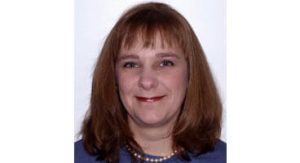
 Perry A. Zirkel has written more than 1,500 publications on various aspects of school law, with an emphasis on legal issues in special education. He writes a regular column for NAESP’s Principal magazine and NASP’s Communiqué newsletter, and he did so previously for Phi Delta Kappan and Teaching Exceptional Children.
 Jennifer Bolander has been serving as a Special Education Specialist for PWSA (USA) since October of 2015. She is a graduate of John Carroll University and lives in Ohio with her husband Brad and daughters Kate (17), and Sophia (13) who was born with PWS.
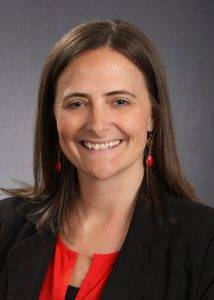 Dr. Amy McTighe is the PWS Program Manager and Inpatient Teacher at the Center for Prader-Willi Syndrome at the Children’s Institute of Pittsburgh. She graduated from Duquesne University receiving her Bachelor’s and Master’s degree in Education with a focus on elementary education, special education, and language arts.
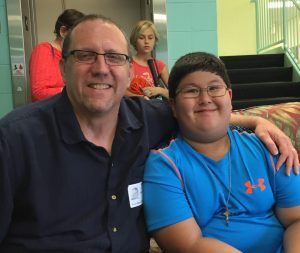 Evan has worked with the Prader-Willi Syndrome Association (USA) since 2007 primarily as a Crisis Intervention and Family Support Counselor. Evans works with parents and schools to foster strong collaborative relationships and appropriate educational environments for students with PWS.
 Staci Zimmerman works for Prader-Willi Syndrome Association of Colorado as an Individualized Education Program (IEP) consultant. Staci collaborates with the PWS multi-disciplinary clinic at the Children’s Hospital in Denver supporting families and school districts around the United States with their child’s Individual Educational Plan.
 Founded in 2001, SDLC is a non-profit legal services organization dedicated to protecting and advancing the legal rights of people with disabilities throughout the South. It partners with the Southern Poverty Law Center, Protection and Advocacy (P&A) programs, Legal Services Corporations (LSC) and disability organizations on major, systemic disability rights issues involving the Individuals with Disabilities Education Act (IDEA), Americans with Disabilities Act (ADA), and the federal Medicaid Act. Recently in November 2014, Jim retired.